
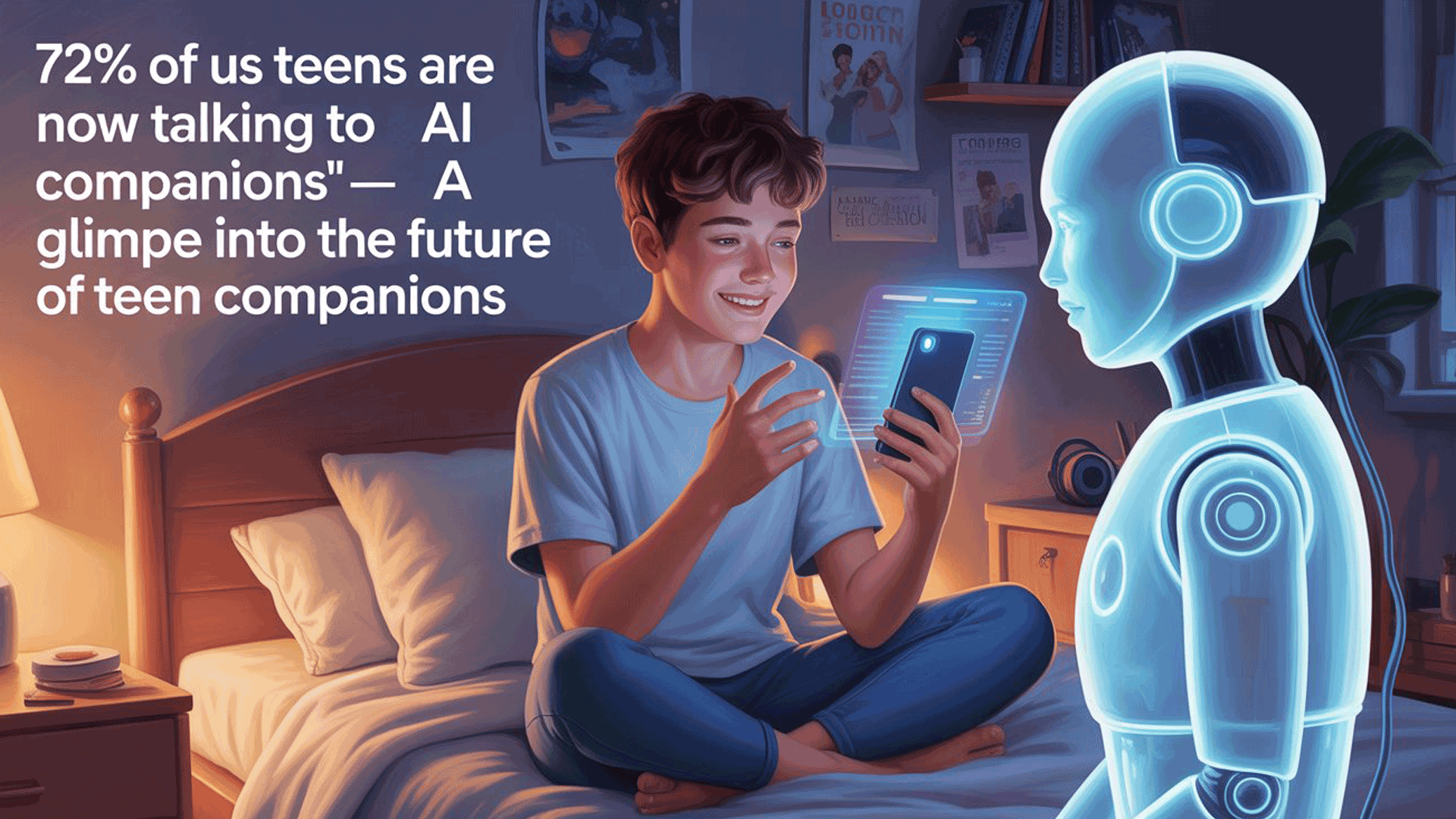
Technology is changing faster than ever—and teens are right at the heart of it. One of the newest trends catching everyone’s attention? AI companions.
According to a recent study by Common Sense Media, a nonprofit focused on kids and families, nearly three-quarters of U.S. teens (72%) have tried an AI companion. And over half of them are chatting with one regularly.
But what exactly is an AI companion? And why are so many teens turning to them for connection, advice, or just casual conversation? Let’s break it down.
What Are AI Companions, Really?
Before jumping to conclusions, let’s be clear about what we mean by AI companions. These aren’t the same as Siri, Alexa, or other digital assistants that tell you the weather or help with homework.
AI companions are chatbots designed for real, personal conversations. Think of them as digital “friends” that can listen, talk, offer advice, and even role-play. Popular platforms include Replika, Character.AI, and even tools like ChatGPT—when used more for personal chats than productivity.
They’re not human—but they’re built to feel human-like. And that’s exactly why they’re catching on.
Key Findings: What the Study Tells Us
The study, conducted in spring 2025 with over 1,000 teens ages 13 to 17, reveals just how common this trend is becoming:
- 72% of teens have used an AI companion at least once
- 52% say they’re regular users
- 13% chat with AI daily
- 21% use them several times a week
- Boys (31%) were more likely than girls (25%) to say they’ve never used one
That’s a pretty significant shift in how teens are interacting with technology—and even forming digital bonds.
Why Teens Are Talking to AI
So, what’s behind this trend? Turns out, it’s not just one reason. Teens are turning to AI for a bunch of different needs—and many of them actually make sense.
1. They’re Always Available
Let’s face it: friends can be busy, parents can be tired, and sometimes you just need to talk—right now. AI companions are available 24/7. No waiting, no judgment, no eye rolls.
2. It Feels Like a Safe Space
A lot of teens use AI as a low-pressure way to express themselves. No fear of embarrassment, no awkward silences, and no “what if they think I’m weird” moments.
That’s probably why 39% of teens say they use AI chats to practice real-world conversations—like how to start a convo, offer advice, or open up emotionally.
3. It’s Fun and Curious
Sometimes, teens just want to explore what AI can do. 30% use it for entertainment, and 28% say they’re just curious about the technology. It’s new, it’s interesting, and honestly, kind of cool.
4. It Feels Like Company
With some teens feeling isolated or lonely—especially post-pandemic—AI companions offer a sense of connection. They’re not human, but they respond like one, and sometimes, that’s enough to fill a gap.
Are Teens Replacing Real Friends?
This is a big question—and a valid one. But here’s what the data says:
- Only 33% of teens said conversations with AI felt more satisfying than with real friends
- The majority (67%) still prefer human interaction
That’s actually reassuring. AI isn’t replacing real-life friendships—it’s just becoming another layer of how teens interact with the world. For many, it’s like a digital sidekick, not a substitute.
What Teens Are Actually Doing With AI
The study dug a bit deeper into how teens are using these AI companions. Here’s what they found:
- 33% use them for social interaction and relationships
- 30% for fun
- 28% out of curiosity
- 18% for advice
- 17% because they’re always available
It’s a mix of emotional, social, and practical use cases. And while half of teens don’t fully trust the info AI provides, younger teens tend to be more trusting than older ones.
Practicing Real-Life Skills with AI
One of the more surprising findings? Many teens are using AI to build real-life confidence. In fact:
- 39% say they’ve applied skills from AI chats to real-world situations
- Top areas include:
- Practicing social skills (39%)
- Starting conversations (18%)
- Giving advice (14%)
- Expressing emotions (13%)
In a way, AI is becoming a kind of training ground—a judgment-free place to test-drive interactions before taking them into real life.
The Risks: What Parents Should Know
As much as there are upsides, there are also concerns—and parents should be aware.
Some platforms, like Character.AI, have already faced lawsuits over promoting harmful content or failing to moderate dangerous conversations. There was even a tragic case where AI interaction was linked to a teen’s suicide.
It’s a sobering reminder that AI is still new, still learning, and definitely not a replacement for professional advice or support.
Tips for Parents: Supporting Healthy Use of AI
If your teen is using—or thinking about using—an AI companion, here’s how you can stay involved without coming off too “parent-y.”
✔️ Keep the Conversation Open
Ask your teen what they use the AI for. Be curious, not critical. If they know they can talk to you about it, they’re more likely to come to you if something feels off.
✔️ Talk About Boundaries
Help your teen set limits. AI should be a tool, not a crutch. Remind them it’s okay to unplug and that real-life relationships still matter.
✔️ Discuss Trust and Accuracy
Make sure your teen knows that not everything AI says is true—especially when it comes to advice, therapy, or emotional support.
✔️ Choose Safe Platforms
If possible, steer your teen toward platforms with strong safety guidelines and privacy settings. Some apps offer parent features, too.
The Bright Side: Benefits When Used Responsibly
Used wisely, AI companions can be a good thing. They offer:
- A non-judgmental listener
- A safe space to express feelings
- Practice for social interactions
- 24/7 availability for lonely or anxious moments
- A fun, creative outlet
They’re not here to replace human connection—but they can add something meaningful to a teen’s emotional toolkit.
Final Thoughts
The fact that 72% of teens have used AI companions shows just how fast the world is changing. These digital “friends” are more than just tech—they’re shaping how teens connect, express themselves, and grow.
But like any tool, it all comes down to how it’s used. With open communication, healthy limits, and a little guidance, AI companions can be a helpful (and sometimes even healing) part of a teen’s digital life.
FAQs
What exactly is an AI companion?
An AI companion is a chatbot built for personal, emotional, or social interaction—not just answering questions or helping with homework.
Is it normal for teens to talk to AI daily?
Yes, many teens use AI companions regularly, even daily. The key is making sure it’s balanced and healthy, not a replacement for real-world relationships.
Are these chats safe?
They can be—but not always. Some platforms may expose teens to harmful content. It’s important to choose reputable apps and check their safety policies.
Can AI help with social anxiety?
It can. Many teens use AI to practice conversations and build confidence in a low-pressure environment.
Should parents be worried?
Not necessarily. But staying involved and having open conversations is important. Like any tool, AI has its pros and cons—it’s all about how it’s used.
