
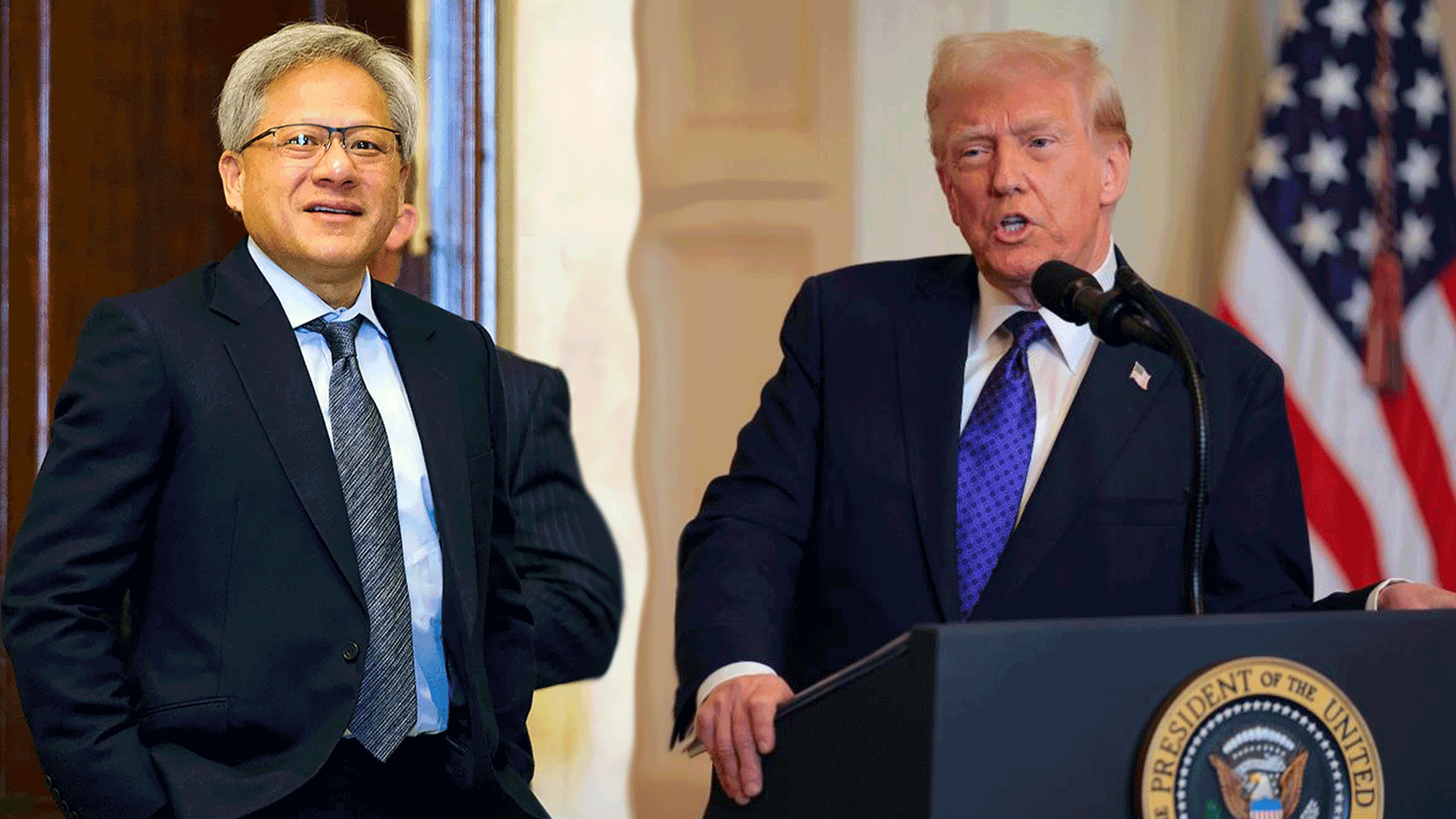
In the face of rising concerns about President Trump’s renewed tariff agenda, Nvidia CEO Jensen Huang is staying calm. During a recent interview with USA Today, the head of the world’s most valuable chipmaker made it clear: Nvidia isn’t worried.
“We’ll work through it,” Huang said confidently, adding that disruptions are a part of doing business and that both companies and countries will adjust over time.
Coming shortly after Nvidia became the first publicly traded company to cross a $4 trillion market cap, Huang’s statement shows just how confident he is in Nvidia’s global standing, even with shifting trade policies on the horizon.
Nvidia’s Calm Approach to Trump’s Tariff Moves
What Did Huang Actually Say?
In the interview, Huang addressed the potential impacts of Trump’s new tariffs and the “reciprocal” trade rates expected to take effect on August 1. While he admitted that no one likes disruption, he emphasized that companies like Nvidia have faced and survived trade rules, tariffs, and policy changes before—and will again.
“Every single year there were rules and taxes and tariffs and policies and regulations, and we survived,” Huang said. “I have every confidence that the world is going to survive this… we’ll make the best of it.”
Why Is This Important for Nvidia and the Chip Industry?
1. Global Chip Trade Is Complex
Nvidia, like many other tech companies, relies on a global supply chain. From sourcing materials to manufacturing and distribution, semiconductors pass through many hands. Tariffs could raise costs at multiple points, but Huang’s relaxed tone shows that Nvidia is prepared to manage those impacts.
2. Confidence Reflects Strong Position
With a market cap exceeding $4 trillion, Nvidia is now a tech giant, and it shows in how the company approaches international challenges. Huang’s message to investors and the public is simple: “We’ve been through worse. We’re ready.”
3. Focus on U.S. Manufacturing
Interestingly, Huang didn’t just talk about surviving tariffs—he also threw his support behind President Trump’s push for domestic chip manufacturing, calling it “great for our industries” and essential for national security.
Nvidia’s Support for U.S. Chipmaking
In the same interview, Huang praised the idea of boosting U.S. chip production. He said it would benefit both the economy and American workers:
“We’ve lost a lot of manufacturing capability and skills… We want to bring that back to the United States. It’s very important to national security, industrial security, [and] supply chain resilience.”
This viewpoint aligns with broader efforts in Washington to reduce dependence on foreign-made semiconductors, especially from China and Taiwan.
So, Will Tariffs Affect Nvidia?
The short answer: Not immediately or significantly—at least according to Huang.
He acknowledged that tariffs can be a hassle, but he’s confident that Nvidia will adapt quickly. The company has resources, experience, and international reach that smaller tech firms might not have. And with U.S. manufacturing on the rise, it might even turn into a long-term advantage.
Tips for Investors Watching Nvidia’s Next Move
If you’re an investor or just curious about how Nvidia will handle future tariffs, here are a few tips:
✅ Follow Government Trade Updates
Tariff announcements can come fast—and the details matter. Keep an eye on both U.S. and international trade offices to understand how upcoming changes may impact supply chains.
✅ Watch Nvidia’s Global Strategy
Nvidia is likely to adjust its supplier or manufacturing partners if tariffs hit a particular country hard. Follow company press releases, especially regarding shifts in sourcing or production.
✅ Track U.S. Chip Investment News
With support from the CHIPS Act and other federal initiatives, Nvidia and other companies could receive government incentives to bring manufacturing back to the U.S.—and that’s a big opportunity.
Conclusion: Nvidia Isn’t Flinching
As President Trump prepares to roll out a new wave of tariffs, some companies are holding their breath. Nvidia isn’t one of them. Jensen Huang’s calm, confident message shows a company that’s ready for whatever comes next.
Between its solid global presence and strong belief in U.S. manufacturing, Nvidia appears to be playing the long game. Investors, fans, and industry watchers can take note: this chip giant is built to adapt—and to lead.
FAQs
Will NVDA be affected by tariffs?
Possibly, but the impact is expected to be minimal in the short term. Nvidia CEO Jensen Huang has stated the company will “work through” any changes and adapt as needed.
How much did Nvidia lose from tariffs?
There hasn’t been a specific figure released for losses related to tariffs. Nvidia has faced tariffs in the past but has managed to grow rapidly despite them.
What are the tariffs imposed by Trump?
Trump has introduced new “reciprocal” tariffs that are set to take effect on August 1. These may affect countries that the U.S. believes are not offering fair trade conditions. The details vary by country and product.
Is Nvidia exempt from tariffs?
No, Nvidia is not officially exempt. However, due to its global operations and adaptive strategy, the company can shift production and supply routes to reduce potential impacts.
